Thoughtographs: Aliaskar Abarkas 2
A second conversation: on the choreo-sonic and the surreal potentiality of dreaming
MARTIN HARGREAVES
This is the second Thoughtograph we’ve done. Should we talk about your project at Sadler’s Wells — what you called Act 0: rehearsing / rehearsal — which is really about asking: “how do we come together and practise being together with our practices?” And shall we talk about the transition from Act 0 to Act 1?
ALIASKAR ABARKAS
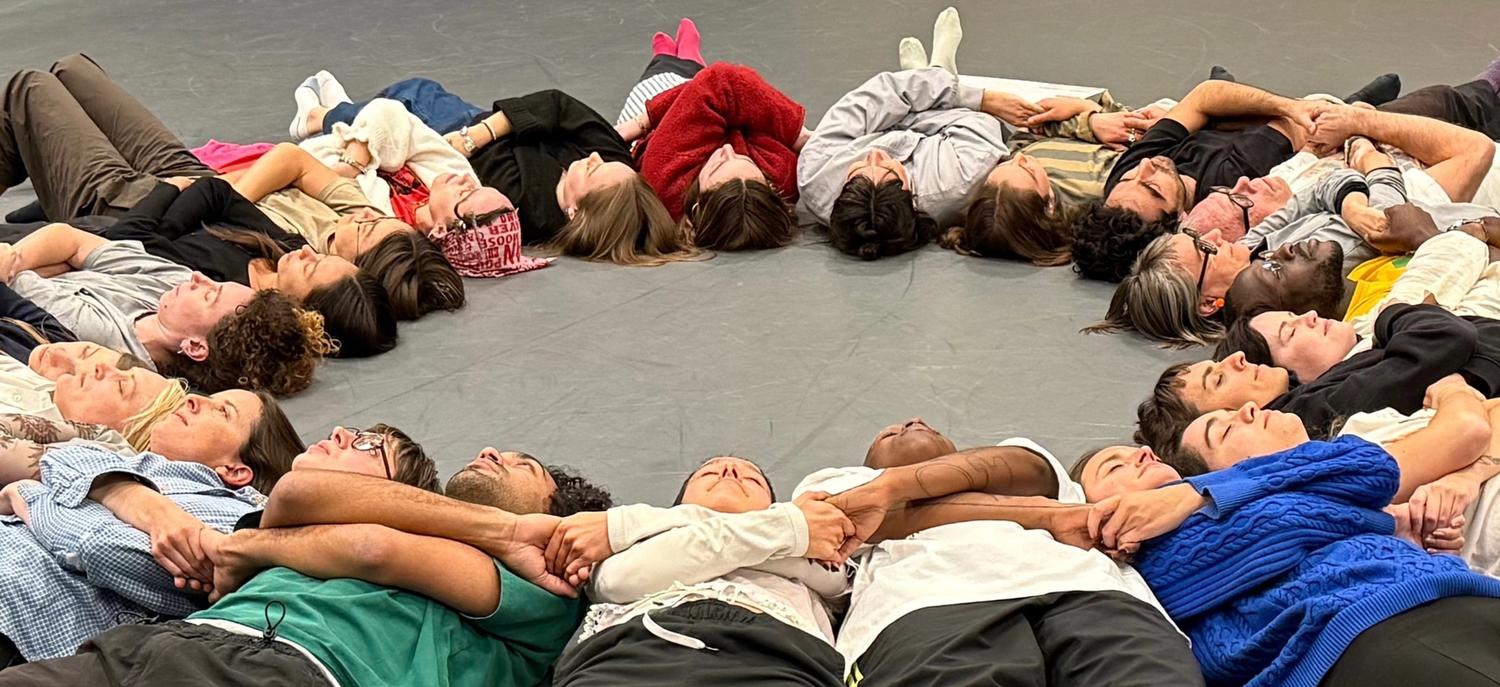
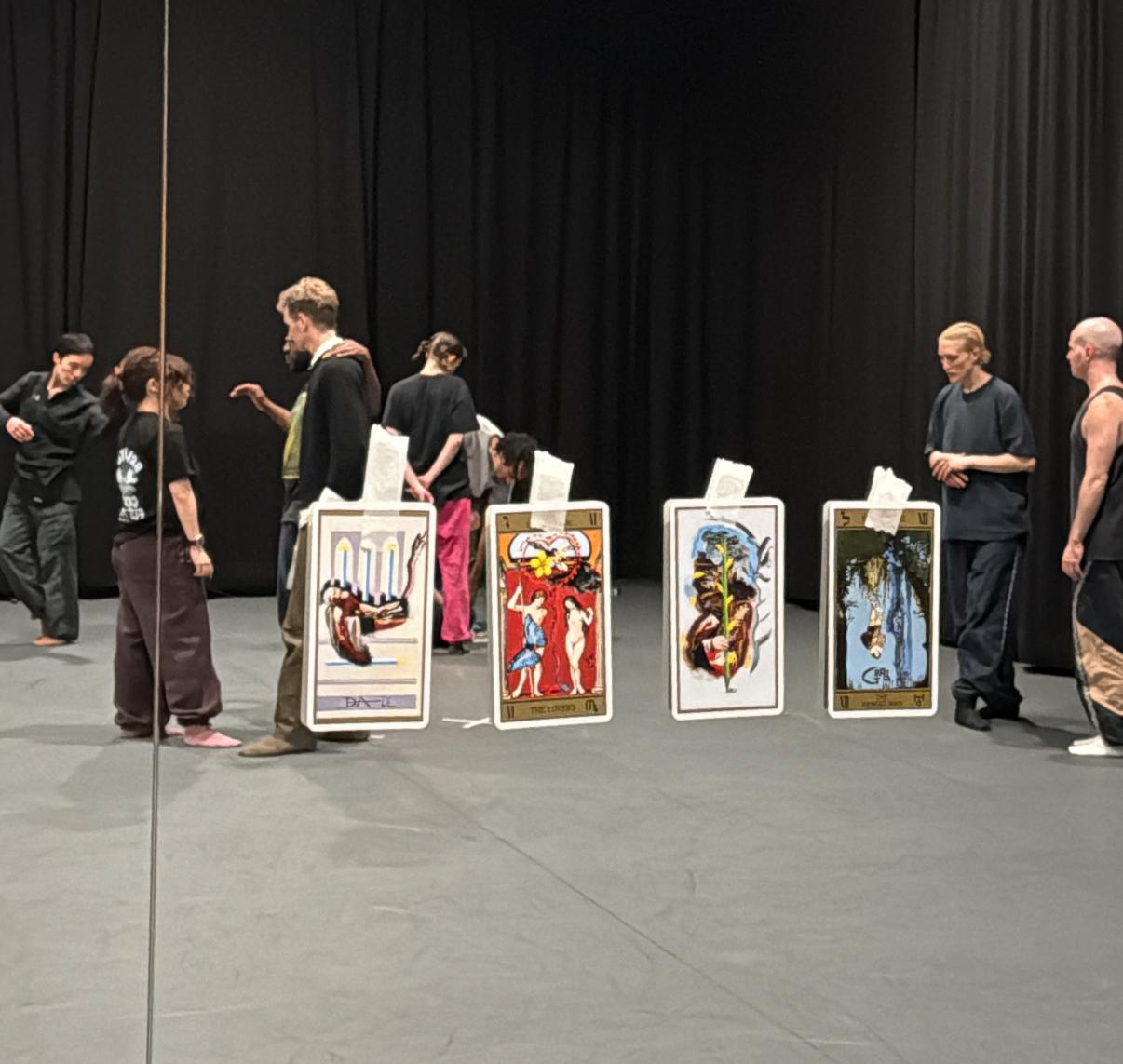
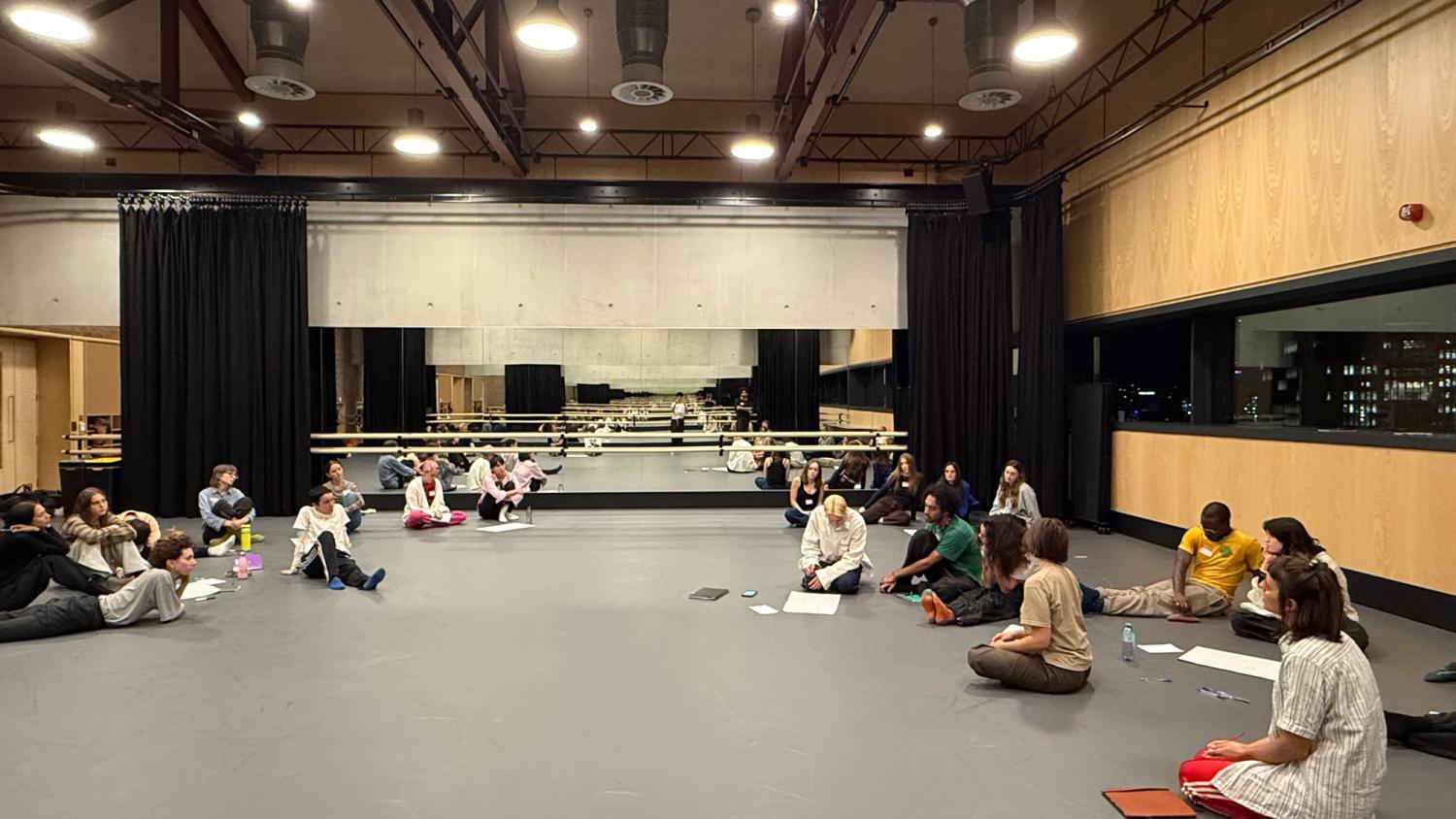
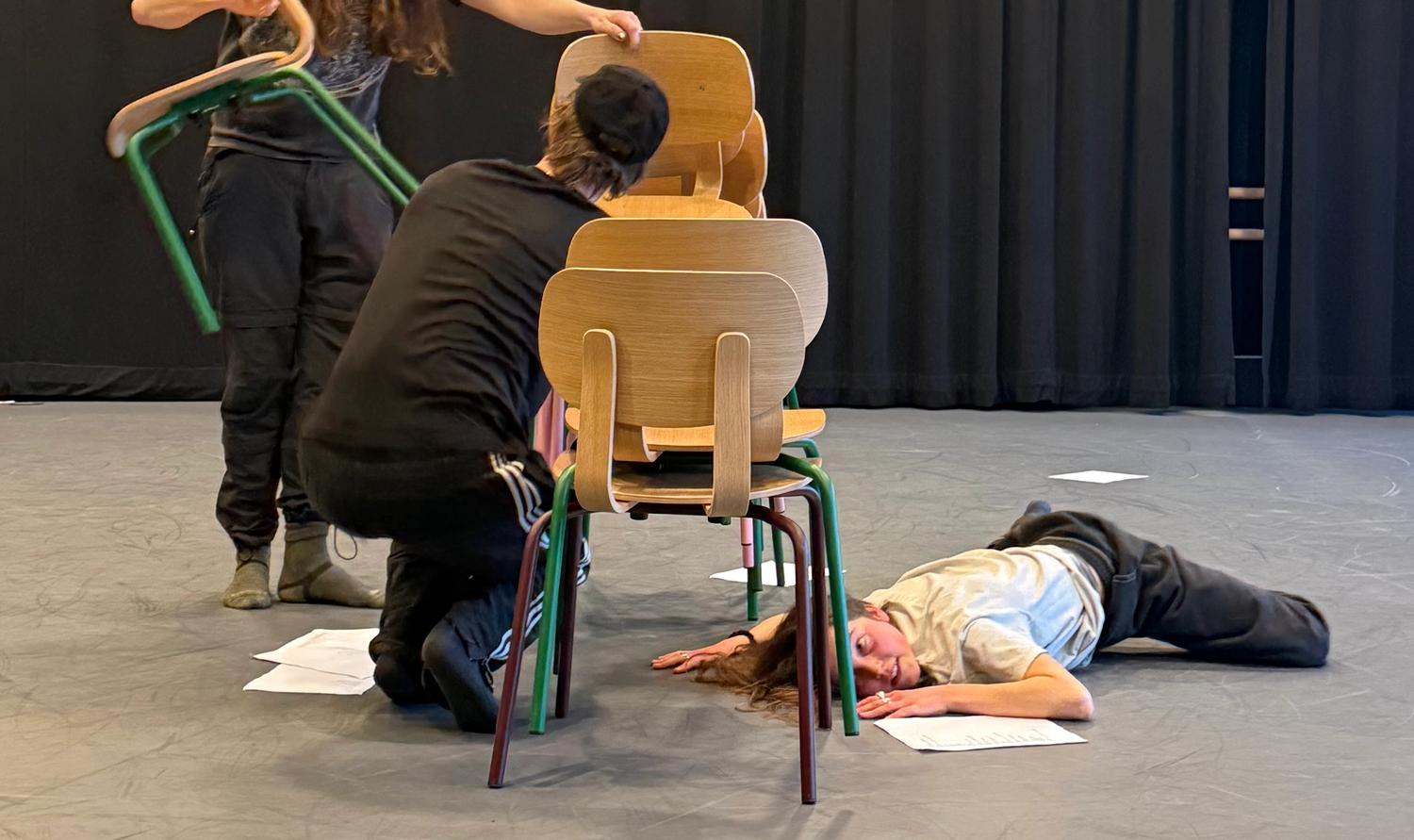
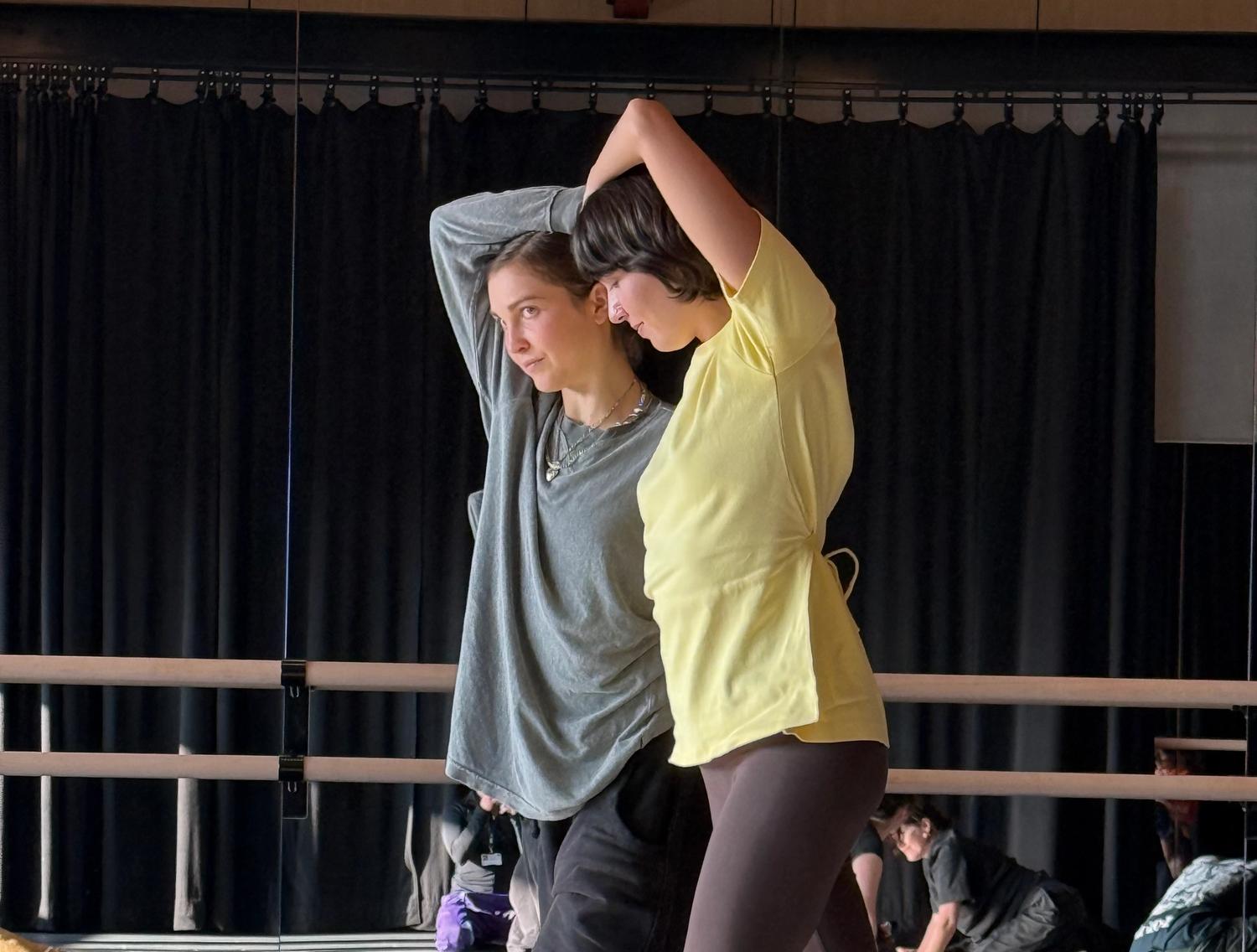
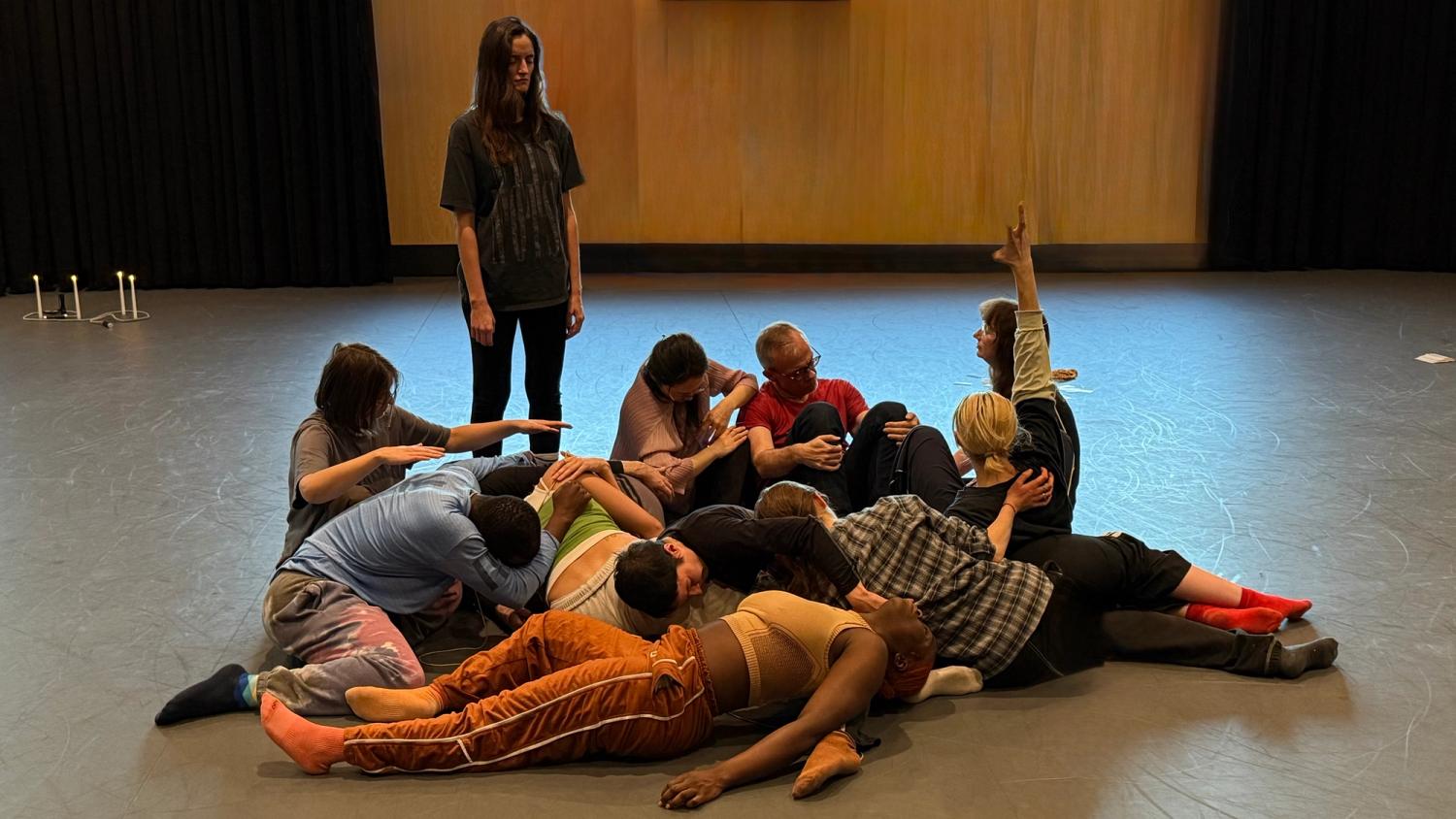
Act 0 has run for seven sessions. We selected 33 from 88 applications, and over time the group settled into a core with some movement at the edges, plus occasional guest facilitators. It builds on a method I developed at Swiss Church: using institutional access to open a space, then letting the work be shaped by who enters it. At Sadler’s Wells, the dance studio mattered — dancers bring a particular readiness to materialise prompts through the body.
MARTIN
I guess this connects to your interest in the choreographic itself? Someone who situates themselves within dance often already understands choreography as something that can be materialised — and they’re comfortable engaging with that process directly.
ALIASKAR
At the same time, I’ve been thinking more broadly about contemporary dance through working in proximity to the dance world.
My approach is to pay close attention to who is in the room — their skills, interests, and what they can share — and to place those practices in relation to one another so something can emerge.
We might have dancers alongside poets, musicians, and theatre practitioners. Rather than imposing a structure, I begin with the people present and build from their relations.
MARTIN
So you don’t go in with pre-set scores — or do you? How do you work with what’s in the room? You recognise what people are bringing, but what’s your process for understanding and shaping what’s being offered?
ALIASKAR
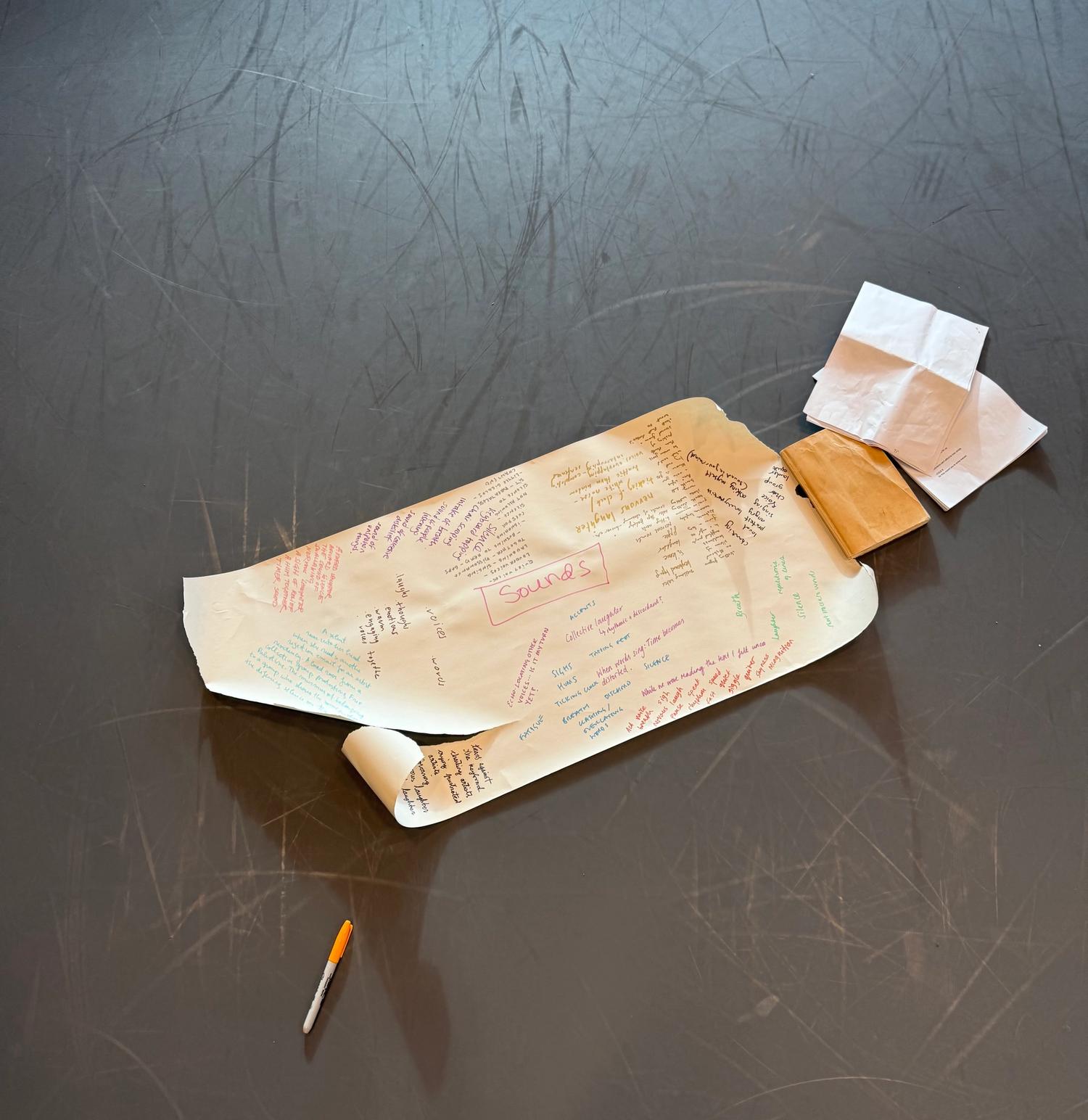
In the first sessions, we worked through very simple activities — sonic and movement-based exercises — mainly to get to know each other. Sometimes it was as basic as going for a walk together and talking. It was about building attention and familiarity before building form.
As I began to understand the group more — their tendencies, their energies, their interests — I gradually introduced more structure. But that structure was always responsive. Even the energy in the room shaped the direction. I want the process to remain adaptive rather than imposed.
Some sessions focused more heavily on sound and movement. In a way, I was shifting from having positioned myself as a composer in earlier projects to consciously occupying the role of choreographer.
For me, choreography here was not primarily about arranging movement; it was about structuring relations through sound. I was thinking through sound as the underlying compositional logic — through collective music-making, through listening, through rhythm — and allowing movement to emerge from that structure.
So yes, this phase was prior to rehearsal in the conventional sense.
MARTIN
Because rehearsal usually implies repetition. Through repetition, you either begin to fix something or deepen your understanding of it. And that’s a fairly normal function of a dance studio — repetition.
But in your practice, there isn’t direct repetition. You don’t usually return to the same material and refine it in that way. So I’m wondering whether there’s an interest in starting to build material that accumulates — something that you revisit each time you come together?
ALIASKAR
I kept asking: what comes before rehearsal — before there is even a structure to refine? Act 0 was about exposing the formation of the work itself as a shared practice, allowing learning, influence, and collective authorship to emerge before anything was fixed.
This time, I brought scores and propositions from other performances back into the studio, holding them within the group to see how they transformed through collective activation. Structure was not imposed; it slowly emerged through response.
One of the first anchoring elements was the lullaby — a form that is universal yet culturally specific, simple yet bound to intimacy and care. After testing a lullaby score in Venice, I reactivated it with the group in Act 0, where it became a core structural element through collective improvisation and sound-making.
Rather than perfecting material, I worked through frameworks that could hold multiple actions and transformations — a method I’ve used before — returning repeatedly to ideas of scale and replaceability. Some elements formed the skeleton of the work, particularly how time was experienced; others remained flexible.
From there, choreography was composed through sound. The participants’ choir generated a layered soundscape that became the ground of the performance, later expanded through collaborators such as Hyelim Kim’s flute improvisations.
As the work evolved, it naturally moved toward the logic of dreams — a surreal potentiality where radically different gestures and moments coexist without justification. The dream became both the aesthetic condition and the ethical permission of the work.
MARTIN
Is this also part of the ethics of collaboration for you? It feels connected to this idea of surreal potentiality — because, as I understand it, you’re not inviting people to become your performers, or to simply service your idea. The work is built around them as themselves, with their own desires for something to happen.
So I’m wondering whether this dream potential is also an ethical position — because it allows people to follow their own logic, their own impulses, within the container and structure you’re providing. What something means for one person doesn’t have to mean the same thing for another.
ALIASKAR
The phrase “surreal potentiality of the dream” describes both the atmosphere and the ethics of the work. Working through dream logic allows participants to bring desires, gestures, and actions into the space without needing to justify them in advance — they don’t have to make conventional sense, yet within the shared structure they become coherent.
To support this openness, I introduced objects and instruments not as props but as possibilities — creating conditions for sound, action, and momentary performances to emerge. Different disciplines responded in distinct ways: dancers, theatre actors, sound artists, and poets each activated the space according to their own logics.
Text often began to function as a score, shaping rhythms and actions, while other elements remained flexible. Gradually a structure formed in which some components became central and others replaceable.
The choir emerged as a core, scalable element — capable of expanding from a small group to hundreds of participants without altering the fundamental logic of the work.
MARTIN
So one of the central elements is the choir — that feels essential. But what about specific materials? For example, when a poem is introduced — does that particular poem need to remain, or is it more the presence of poetry as a form? Is it the notion of a poem, or a specific text?
ALIASKAR
Not necessarily a specific poem. In many cases, it can be another poem or another poet.
What matters is whether the text is functioning simply as material, or whether it’s operating as a score — something that establishes a structural foundation for what follows.
If a poem becomes a score that shapes the actions, rhythms, or relationships in the work, then that specific text might need to remain, because it’s holding the structure in place. But that doesn’t mean the space can’t include multiple poets, or that poetry as a practice can’t continue to evolve within it.
So there’s always a balance between what is structurally essential and what remains open to replacement and variation.
MARTIN
You used the word “narrative.” Are you using that to describe a temporal order — how things unfold in time?
ALIASKAR
Yes — a sense of narrative starts to take shape regardless. If you begin with a choir working through a lullaby score, it immediately establishes a setting — an atmosphere — even if that narrative remains fragmented or abstract.
It’s not a linear story, but a progression of states, textures, and relations that accumulate over time.
As I was thinking about composing choreography through sound — I started wondering whether I needed a different term to describe the method. That’s when I began using “choreo-sonic.”
I’m curious what that suggests to you. When I say choreo-sonic , what do you hear in it?
MARTIN
Well, “choreo” actually shares a root with “choir.” Originally the word choreography was invented to refer back to an idea of the drawing or organising of the chorus in Greek theatre. The chorus would sing, provide narrative structure, and also move together.
So choreography already has this sonic and collective origin.
ALIASKAR
So in a way, choreography already contains something choreo-sonic within it.
MARTIN
Yes — but I think your emphasis shifts the balance. You’re not treating sound as accompaniment to movement. Instead, you’re asking us to listen to movement as much as see it — not instead of seeing, but as a primary mode of engagement.
Sound becomes a structuring force for how movement is perceived, timed, and organised.
ALIASKAR
Yes — I really emphasise the role of sound and listening as central to the work.
MARTIN
Do people come to Act 0 wanting to try things out?
ALIASKAR
Definitely — and I actively encourage it. One participant recently told me her new performance began with an exercise from Act 0. That’s essential to the project: the space works as a two-way testing ground, where ideas are developed collectively and then carried back into individual practices. This circulation is part of the ethics of the work — an economy of exchange rather than extraction.
Recently I also brought together Act 0 with a working group I’m developing at LUX Moving Image, which emerged from engaging with Nightcleaners (Berwick Street Collective, 1975) and its use of sound and collective testimony. That group focuses more on conversation around artistic labour and lived conditions.
I intentionally shared participants across both contexts, prioritising continuity over constant renewal. What interests me is how sustained relationships deepen practice, build shared language, and travel across institutional frames.
MARTIN
It feels like you’re developing a trans-institutional practice — one that emerges within specific institutional frames, like the Rose Choreographic School or LUX, while responding to the particular conditions of each space. At Rose, the dance studio foregrounds movement and embodied experimentation. At LUX, the moving-image context draws a more discursive community.
It seems that part of your broader method is not critiquing institutions, but working with their affordances — what each space makes possible?
ALIASKAR
Yes — I’ve become quite practical in that sense.Artists often work in the spaces between institutions, carrying relations and practices across contexts. For me, orchestrating those movements is part of the choreography itself.
I recently brought the LUX working group into the dance studio, allowing text-based research and embodied practice to intersect. The shift in context reshaped participation — and that transformation became part of the work.
After seven sessions, Act 0 began to transition into Act 1. Rather than closing the process, I invited the group into one of my participatory performances at YDP London — not to present studio material, but to encounter how these structures operate in public.What mattered was creating a shared moment of publicness: being in public together, with or without participation.
MARTIN
So you weren’t representing Act 0. You weren’t turning it into a finished work.
ALIASKAR
No, not at all. It was a new performance I was testing. They joined as audience members like anyone else — with the option to participate.
It was also about building relations — introducing people to spaces and networks they might not otherwise access. A simple, practical gesture.
MARTIN
So again you’re moving between institutional frames — LUX as an archive, Sadler’s Wells as a dance house, YDP as a project space — and allowing each context to reshape participation.
So again, you’re shifting institutional frames, which would suggest certain kinds of material shifts. But actually, you’re interested in this trans-institutional practice.
And will there be a break, or are you carrying on?
ALIASKAR
There won’t be a break. Act 1 isn’t a reset — it’s a shift in degree. The space stays porous, but the composition clarifies: certain prompts and roles start to recur, and the work’s skeleton becomes legible. That’s also when authorship and responsibility become harder to leave implicit.
MARTIN
Will the subheading still be “rehearsing rehearsal”, or does Act 1 become something else?
ALIASKAR
Act 0 was about rehearsing the conditions for rehearsal — the space before form stabilises.
Act 1 is different. It’s not rehearsal yet, but it begins to identify the structures that make rehearsal possible.
So the emphasis shifts: from exposure and exploration toward composition.
MARTIN
I liked that Act 0 felt like the space before the conditions arrive. It sounds like Act 1 might be where you start to establish those conditions more concretely.
ALIASKAR
Yes. Act 1 is where the core elements begin to clarify themselves — what is essential, what is replaceable, what can be scaled.
It’s not about fixing the work. It’s about understanding its skeleton.
The surreal potentiality remains — but now I’m asking: what holds it together? What allows it to expand or contract without collapsing?
MARTIN
So it’s not yet a rehearsal, because you’re not fixing a final form. It’s more like writing: before you were taking notes, and now you’re beginning to see what insists on itself. What emerges as structure? How do individual prompts start to form sentences — without becoming fixed?
There’s an impulse to organise the experiments.
ALIASKAR
Yes. Act 1 is about developing the vocabulary that connects these different prompts.
And through this process I’ve started thinking more poetically — especially in how I work with language and text. I’ve found myself writing more poems, because poetry holds this surreal potentiality while still being composed.
MARTIN
And your poetry also has specificity. You don’t choose a word to fix its meaning, but because of how it sits beside other words — how it releases potential.
It’s not arbitrary placement, but relational composition.
ALIASKAR
Exactly. And until now, text wasn’t my primary compositional tool — it was mostly a way of communicating ideas. Now it’s beginning to function more like a score.
MARTIN
That’s interesting, because at LUX you describe the work as a kind of play — not with characters and arcs, but with language as dialogue, as something spoken and collective.
ALIASKAR
In a way, I was trying to remove individuality from the script — so the voices function more like a choir.
We discussed what it means to “honour” the person who originally said something. But I’m not convinced that simply attaching a name does that. On the page, it remains a sentence. The presence of the speaker isn’t actually restored by attribution alone.
For me, it can be more honest to remove the names entirely — to flatten authorship and foreground the collective relation that produced the text.
What interests me is that the script emerges from live conversation. There’s contingency in it — shifts in tone, interruptions, unexpected turns. It’s not entirely within my control. That unpredictability becomes part of the composition.
MARTIN
And even here, in this conversation, we’re borrowing language. We don’t invent words — we draw from elsewhere. We test concepts between us in a way that neither of us would necessarily speak in another context.
It’s a relational experiment with constraints: we’re trying to remain legible to each other while also trying things out.
There’s composition happening without a fixed centre of authorship. I don’t even fully know what I’m saying in advance — and because it’s being transcribed, it carries a different weight.
ALIASKAR
We’ve been in conversation for a while now, and that feels central to the work. It’s also about mentorship — you as someone deeply engaged with my practice.
At the same time, I’ve been thinking about your role as a dramaturg within this choreographic process — how that function operates through conversation itself. How do you understand that?
MARTIN
When people ask me what I do as a dramaturg, I usually say I have conversations with artists. The form remains the same, but what the conversation produces shifts according to each practice.Sometimes this involves responding to material — particularly in dance contexts — through observation rather than physical participation. Other dramaturgs work through embodiment; I tend to work through dialogue, often before work even takes shape.
With you, I’ve seen material emerge over time, but there is also an ongoing conversation that extends beyond any single institutional context. It may originate at the Rose Choreographic School, but it isn’t confined to it — everything else in your practice feeds into each exchange. For me, the dramaturgical situation is fundamentally dialogic.
Over time, this process softens what I would call paranoid authorship — the impulse to tightly own ideas or trace every phrase back to an individual source. While artists must be properly credited and supported, an overemphasis on ownership risks reinforcing a myth of solitary genius.
For me, artistic skill lies in mediation: between institutions, collaborators, performers, and material processes — whether bodies in motion or, in your case recently, glass makers and silversmiths. This mediation isn’t peripheral to the work. It is the work.
ALIASKAR
Yes — and participation itself shapes authorship. The longer someone engages, the more responsibility, agency, and belonging they hold within the work. Roles don’t arrive fully formed; they emerge through degrees of involvement.
That’s how I come to occupy the position of choreographer — not by assigning authority, but through holding the structure. And in the same way, your role has shifted from mentor or interviewer into something closer to a dramaturgical presence within the process.
The roles define themselves through practice.
MARTIN
Which is why the ethical question can’t be solved simply by attributing who said what. What’s at stake is how authorship is understood relationally.
Of course, the project carries your name and your responsibility is different from that of the participants. But the creative force isn’t individual — it emerges between people.
That was central to why I shaped the school as a space of encounter rather than instruction. I’m not interested in expertise delivered from above. I’m interested in what happens when people think and make together.
ALIASKAR
And over time, those encounters begin to circulate beyond the space itself. Practices shift, ideas travel, new work emerges elsewhere.
I don’t experience that as something that needs to be claimed or credited back. For me, it’s closer to a principle of generosity — an ethics of shared formation rather than ownership
MARTIN
I also understand that authorship is often tied to livelihood. A name carries currency — it opens doors, grants access, and creates legitimacy.
You mentioned Sadler’s Wells earlier — part of the project of opening that space is precisely about who gets to cross its threshold, and sometimes that happens through recognised names. The same was true when we began the school: having figures like William Forsythe and others attached made the work legible and taken seriously.
So I recognise both the power of naming and the real risks of erasure — particularly in dance, where performers frequently generate material that then disappears behind a singular authorial credit.
But I don’t think the solution is a closed or defensive form of authorship — what I called earlier paranoid authorship — where ownership becomes something to guard rather than relate through.
ALIASKAR
Yes. For me, authorship continues to exist, but it operates relationally. Individuals maintain their practices and visibility, while the work itself forms through collective engagement.
Names remain present — guest workshops are named, collaborators are acknowledged — but the core emphasis is on shared formation rather than tracing every contribution back to an origin.
It’s something that remains open and evolving.
MARTIN
Which makes the transition into Act 1, and potentially later Acts, especially interesting. Does the project always remain an Aliaskar Abarkas work? Or does authorship eventually shift or diffuse?
There’s no clear answer — and perhaps there doesn’t need to be one!
ALIASKAR
I’m comfortable with the work carrying my name while remaining collectively formed. The name doesn’t negate the relational process — it holds responsibility for the structure that allows it to happen.
MARTIN
That’s similar to your object-based work. When we encounter the glass pieces, you don’t list every fabricator — yet the collaborative labour is fundamental to the work’s existence.
ALIASKAR
When the work is exhibited, I don’t list every collaborator. Of course I’m grateful for the team — their labour brings depth to the work — but authorship becomes legible through the form itself.
When you encounter the glass pieces, you immediately recognise them as my work, not the fabricator’s. The making is collective, but the methodology is specific.
I’m interested in how a practice becomes recognisable beyond a name — how a way of working forms a signature. At a certain point, you don’t need the name attached; the method carries it.
MARTIN
That connects to the lullaby and to the Qur’an. You’re not claiming authorship over these texts — you’re working in relation to cultural, spiritual, and esoteric materials that pre-exist you, like the images from Rome.
Your authorship isn’t about origin, but about how you activate, translate, and re-compose these sources.
ALIASKAR
Exactly. With those texts, authorship is understood as something greater — the word of God — and everyone else engages with it through practice and ritual.
There are already choreographic structures embedded in how these texts are lived, recited, embodied.
That’s partly why choreography feels like the right discipline for me. More than any other form, it can hold radically different materials — sound, ritual, bodies, objects, histories — in relation.
It allows for what I think of as the surreal potentiality of the dream: multiple logics coexisting without needing to resolve into one.
So if I had to name a role, it would be artist — and, specifically, choreographer.
MARTIN
I’m going to test something — and I don’t know if I fully believe it yet — but is part of this because dance operates through a sensorial logic rather than a language-based one? Things make sense because you feel them. You’re kinetically engaged — even as a spectator, the body is addressed.
That’s how I often understand dreams: not primarily as images, but as sensations — emotional and physical at once.
ALIASKAR
Yes, completely. Even last night I had nightmares that gave me a headache in the morning — the experience becomes physical.
That sense of affect is central.
MARTIN
You also said earlier that working with dancers feels different from working with theatre performers. Actors often want to understand motivation before action — why they are doing something. Dancers tend to act first, and understand through doing. There’s something about presence.
ALIASKAR
These are generalisations, but they point to something I value.
With dancers, you enter through practice — you try things out and knowledge emerges through the body. That’s also why conversation has limits in this work. Some things can’t be fully articulated in language.
The body exceeds language. Language moves toward meaning, order, grammar. The body moves in multiple temporalities and directions — sometimes contradictory, sometimes simultaneous.
Pleasure and pain can coexist. Sound, emotion, memory, and sensation all act at once.
That’s where the dream logic lives.
And that’s why choreography feels like the right space for my work — because it can hold complexity without resolving it into explanation.
MARTIN
This feels like a good place to stop for now!